Every year, Uganda joins the rest of the world to commemorate the International candlelight memorial. The International theme for this year was "Many Lights for Human Rights". Uganda organized an awareness week where a number of activities including boda boda sensitization, football tournaments, media campaign, community dialogues, radio and television shows, blood donation, home/hospital visits, school visits, performance by music artists and printing of IEC materials among others.
The commemoration of this day was crowned with a major event on May 18th, 2010 at Busoga Square in Jinja under the slagon ‘Light up the HIV Response’.
The international candle light memorial is one of the oldest and largest grassroots mobilization campaigns for HIV&AIDS awareness in the world. Started in 1983, the Candlelight Memorial takes place every third Sunday in May to honor the lost and raise social consciousness about the disease. The Candlelight also provides opportunities for leadership development, policy advocacy, partnerships, and improvement of community mobilization skills.
In Uganda the first international candlelight memorial was observed in 1988. During that inaugural memorial, TASO, working with the government of Uganda played a key role and mobilized their support groups which mainly constituted people infected and those affected by AIDS at that time. Since then, Uganda has commemorated the international candlelight memorial as a pre-cursor to World AIDS Day, every year.
AIDS Information centre participated in activities that included HIV counseling and testing starting on 10th to 18th May 2010, and exhibiting on the commemoration day.
Monday, 5 July 2010

Over 420,000 people test for HIV with AIDS Information Centre, Uganda
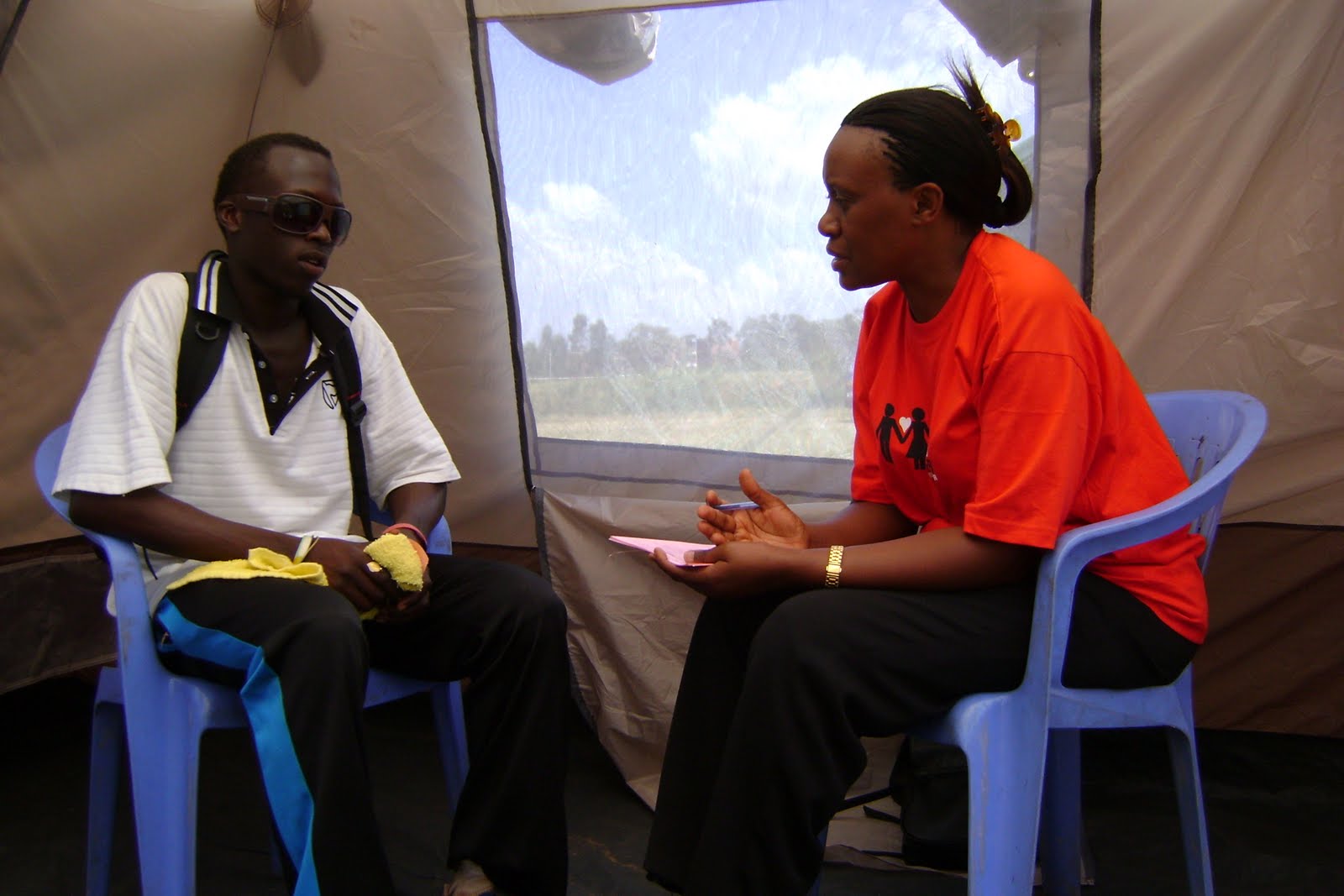
During the year 2009, AIC continued to contribute to the national HIV&AIDS prevention efforts by providing HIV Counseling and Testing (HCT) services among other services. The organisation also continued to design strategies aimed at increasing access to HIV counseling and testing, care and support services. HIV and AIDS, malaria and Tuberculosis remained the main focus of medical services in the organisation. The year saw 422,610 clients counseled and tested for HIV. This was the highest number of clients tested by AIC in a single year since inception.
The majority 51% accessed HCT services in outreaches, 36% in district sites and 13% at AIC main branches. This is comparable to 2008 where 42% of the HCT services were accessed in outreaches, 35% in District sites and 23% in AIC main branches of Arua, Jinja, Kabale Kampala, Lira, Mbale, Mbarara, and Soroti.
Of those tested 57% were female while 43% were male. Female clients are more inclined to know their HIV status as opposed to their male counterparts. This has been the trend for the last five years. It is now expected that with the new program targeting couples, the number of males accessing HCT will increase
The adult age group 25-49 years constituted the majority, accounting for 47% of AIC’s clients. The youth and children below 25 years accounted for 45%.
Summary of AIC service achievements during 2009
- 422,610 received HIV counselling and testing and received their results
- 31,038 clients accessed counselling and testing and received results as couples
- 1,112 prisoners received HCT and got their results in Gulu and Luzira Upper Prison
- 119,612 individuals received abstinence and Being faithful messages through drama and other PTC activities
- 356,681 individuals received abstinence and Being faithful messages through as part of HCT
- 137,663 as part of HCT to youth and children below 24 years
- 1,197,009 pieces of condoms were distributed to 8,642 individuals
- 8,299 clients received Basic care packages.
- 44,861 HIV positive clients were screened for TB
- 8,387 TB patients were counseled and tested for HIV
- 967 TB clients co-infected with HIV had their CD4 count tests done
- 363 TB/HIV co-infected clients were referred for Anti retro viral therapy
- 1057 participants benefitted from different training programmes
For a detailed report please contact AIDS Information Centre at informationdesk@aicug.org
Tuesday, 30 March 2010
Fighting HIV&AIDS Among Youth through Sports

AIDS Information Center-Uganda (AIC) in partnership with Uganda Students AIDS Prevention Association (TUSAPA) organized the first ever sports galla aimed at increasing HIV&AIDS awareness among young people in schools through sports. The event was dubbed ‘Inter-Secondary School HIV/AIDS Prevention Sports Tournament 2010’ and was the first of its kind in Uganda.
The tournament ran for 4 days with 12 secondary schools participating and these included Old Kampala Secondary school, St. Mary’s college Kitende, Kololo S.S.S, City High school, Kampala citizen college school, Mengo Secondary school, Lubiri High school, Uganda Martyrs High school Rubaga, Kithende College School, Kampala Secondary School, Nakasero Secondary school, and Kingsway High school.
Among the games competed for included Football (Major), Netball, Basketball, and Volley ball. All these games were conducted at the same time and same venue where football was being played.
The tournament attracted a number of young people and this was used as a good avenue to reach them with HIV&AIDS Information. As the young people enjoyed the games AIDS Information centre used it as an opportunity to provide services like HIV counseling and testing, educational talks on HIV&AIDS, reproductive health, family planning, drug addictions and dangers of early pregnancies.
Information was passed on to these youth through loud speakers and groups discussions. Young people were asking different questions on HIV&AIDS, pregnancies and other health related issues.
Over 25,000 young people were reached with information on HIV&AIDS and other health concerns. The matches also attracted a number of other people who were not necessarily students who benefited from the free HIV counseling and testing that was provided free of charge at the venue.
St. Mary’s College - Kitende emerged as the football trophy winner after beating Old Kampala Secondary school. Old Kampala won the Basketball trophy, Uganda Martyrs High School won the Volleyball trophy and Kampala Citizen College School won the Netball trophy.
Special thanks to the football governing body (FUFA), SIMKA the Ice Cream Company for their support in making the tournament a success.
Sunday, 20 December 2009
Uganda Bicycle Tour for HIV&AIDS Awareness

Business came to a stand still in Kisenyi as 2 cyclists Mr. Abbey Kiseka and Mr. Augustine Muwonge of Bike Holiday were being flagged off by the AIC Kampala Branch Manager in the midst of a big crowd on 1st November.
The cyclists devoted their time and resources to create awareness about HIV&AIDS as part of their contribution for World AIDS day. With their bicycles they covered 2316 KMs across Uganda reaching approximately 221,191 people with HIV&AIDS messages. They started their journey from AIC Kampala and stopped over at Masaka for a night before proceeding to AIC Mbarara where they were received by the Mbarara Branch Manager. They later attended a radio talk show on HIV&AIDS and also shared their story. The following day they met a large crowd of Mbarara town folks after which they were flagged off to their next destination. They arrived at Kabale the next day and were received by the Manager Mr. Richard Kikaffunda. The two cyclists together with the BM again attended a talk show the day before they were flagged off to continue with their journey in the presence of an excited crowd of people who had left their work to come and witness this rare event. These opportunities were used by the branch staff to promote AIC services and the Couple HCT campaign.
On Tuesday the cyclist reached Arua at approximately mid day. They were received by the Branch Manager Mr. Lulu Henry and the Board of Trust Member Mr. Dick Nyai. Together with the BM and the BOT member, four radio talk shows were attended and several materials on HIV&AIDS were distributed in Arua town. They then proceeded to Gulu from where they went to AIC Lira the following day and reached at approximately 3.00 p.m. They went to AIC Mbale where they attended a radio talk show. The following day they set off for Jinja where they participated in an outreach.
By the time they returned to AIC Mengo Kisenyi in Kampala on 26th November 2009 they had covered 26 districts including the 8 AIC branches of Kampala, Mbarara, Kabale, Arua, Lira, Soroti, Mbale and Jinja.
Wednesday, 2 December 2009
Uganda Ministry of Health calls for voluntary HIV testing

UGANDA yesterday marked World AIDS Day with messages urging men to go for voluntary counselling and testing services.
Health minister Dr. Stephen Mallinga noted that voluntary testing and counselling is an effective strategy to access preventive and care services.
World AIDS Day was adopted in 1988. It is commemorated every December 1 to raise awareness about the pandemic that has killed more than 25 million people world-wide since it was first discovered 30 years ago.
Globally, the number of people infected reached over 33 million at the end of 2008, while 2.7 million new infections occurred last year.
In Uganda, about one million people live with HIV/AIDS, according to the AIDS Information Centre, while 1.2 million children have been orphaned by the scourge. Last year, 43% of new infections were among married couples.
Quoting Ministry of Health reports, Mallinga said 25% of women in Ugandan have tested for HIV while the men lag behind, with only 21% knowing their status.
He added that 1,200 sites are providing testing and counselling services across the country. “More innovative approaches are needed to mobilise male partners,” he noted. He also called for more testing of new-born babies, saying only 20% of them have been tested. Mallinga’s speech was read at Nakibubo Stadium by health state minister Kamanda Bataringaya. Hundreds of people flooded the stadium and braved the sun to access free testing services from various health providers.
David Musoke, 56, who tested at Nakivubo, said: “I want to know my HIV status because the Government is urging us to test. It is not the first time I am testing for HIV, except that the queues are very long here.” Rose Namuleme, 22, said she had tested in August last year when she had her first child. “Today, I want to know the truth again,” she said.
The Uganda AIDS Commission director, Dr. Kihumuro Apuuli, appealed to the public to do testing together with their partners. “A small percentage of people in Uganda know their status. I urge you to test. It is your responsibility. Access to testing, prevention and treatment is your right.” Florence Ndagire of the Uganda Society of Disabled Children called on the AIDS Commission to establish HIV-prevalence among the disabled.
Present at the function were UNAIDS Africa coordinator Dr. Musa Bungudu, PEPFAR country coordinator Dr. Michael Strong, as well as Dr. Elizabeth Mataka, the UN special envoy on HIV/AIDS in Africa. HIV prevalence in the country fell dramatically, from a peak of 15% among all adults in 1991 to around 5% in 2001. The Government’s ABC prevention campaign greatly contributed to the decline. There has been a slight increase again in HIV-prevalence since 2006, up to the current 6.4%. The availability of free antiretroviral drugs is thought to have led to complacency.
Over 2000 people are said to have tested for HIV at the venue.
Tuesday, 6 October 2009
Uganda Launches Couple HIV testing Campaign

THE ‘Go together Know together’ Couple HIV counselling and TESTING campaign (CHCT) was launched last Saturday amidst fun filled performances by local artistes and comedians.
The event that began in the morning went on till night fall.
Couples had the opportunity to get tested. There was a massive turn up of willing Couples at the two TESTING centres; Aids Information Centre and Uganda Cares. Over 124 Couples tested at Uganda Cares while 151 Couples tested at AIDS Information Centre but only 11 people tested positive.
The campaign aims at increasing the level of HIV/AIDS risk perception among Couples; encourage Couples to collectively discuss HIV?AIDS; go for counselling and TESTING together; adopt and maintain positive health practices and encourage HIV status disclosure among sexual partners.
HIV positive Couples were offered Antiretorival treatment, care and support.
The campaign will go on countrywide. So far the launch kicked off on a positive note.
Artistes such as like Maurice Hasha of Kaleke Kasome fame; Cindy; Rocky Giant and the Theatre Factory performed.
As the music performances went on, those who had the energy for some sporting tussled it out in volleyball, sack race and tag of war. In the end, the message was driven home and the fun was great.
Dr. Raymond Byaruhanga, the director of the AIDS Information Centre, disclosed that the campaign will initially run for six months in eight districts. The districts are Kampala, Jinja, Mbale, Soroti, Lira, Arua, Mbarara and Kabale.
“There are plans to extend the campaign to other parts of the country and to provide free counselling and testing services to couples in additional districts,” Byaruhanga said.
GO HERE
Friday, 31 July 2009
Prisoners to test for HIV: an AIC initiative

PRISONERS and staff of Luzira and Gulu prisons will be counselled and tested for HIV over the next one year, courtesy of the AIDS Information Centre (AIC).
According to an agreement signed on Tuesday, the staff and inmates will be provided with TB prophylaxis, a preventive treatment, to reduce the spread of the disease.
“HIV opportunistic infections, like TB are the leading cause of death among inmates and staff. Over 60% of TB patients are also HIV-positive,” said Denson Nyabana, the assistant commissioner for health services in the Prisons Service.
The partnership will also enable staff and prisoners to get treatment.
In 1993, the Prisons Service established the prisons AIDS control programme to fight HIV.
However, limited funding and inadequate staffing have led to limited access to voluntary counselling, testing and treatment.
Raymond Byaruhanga, AIC executive director, said post-test clubs would be formed for those who have tested positive or not. The group also plans to spend about sh20m on AIDS and TB interventions in prisons.
Subscribe to:
Posts (Atom)
